

124: How to manage your phone use around your kids
Unpacking the “two things can be true” of technoference with ‘Techno Sapiens’ author Jacqueline Nesi, PhD



Welcome to Two Truths—a best-selling newsletter by health journalist Cassie Shortsleeve and Motherspeak creator Kelsey Haywood Lucas. Two Truths explores the many facets of maternal health and living well in today’s world. It’s been named a “best parenting Substack” by Motherly, recommended by The Skimm, and featured in Today, Fast Company, The Bump & more.
✨ Support journalism that supports motherhood! Your paid subscription (less than $5/month) directly fuels this newsletter and our maternal health reporting.
Today’s letter is a collaboration and interview with Jacqueline Nesi, PhD, author of Techno Sapiens — a best-selling Substack on the intersection of technology, psychology, and parenting. It provides research-based, practical advice for navigating the digital age, covering topics like social media, screen time, and mental health for both adults and children. Subscribe to it here.
So much in parenting is a contradiction, not the least of which is reading about our own tech use as parents in an ever-present online world from a digital-only publication about motherhood and women’s health. We get it.
So much of our lives are online and so much of our lives are not. So what do we do?
How do we teach our kids about the loveliness and practicality of the postal system when some nations are doing away with theirs and text messaging has largely replaced the written letter?
How do we be present and intentional with our children, and teach them to be present and intentional in their own lives, too, when we can check emails from every corner of the globe and pay for groceries with our cellphones?
Those are just some of the questions we wanted to answer for you, our Two Truths readers.
Tech use—and news about it—is everywhere: Australia recently made international headlines by banning social media for users under 16. Some schools are going phone-free; tablets are in many Kindergarten classrooms.
Many of us are on our phones a lot of the time. Many of us don’t want to be. Many of us are grateful for the work, access, and ease that technology creates for us.
So, recently, we reconnected with Jacqueline Nesi, PhD, a psychologist who studies tech use in adults and kids and author of the incredibly popular Substack Techno Sapiens (great name, right?). We first connected with Nesi a few years ago, when Cassie participated alongside her on a panel about tech use and mindfulness.
Sometimes, the tech conversation can feel polarizing; advice can be fear-mongering. Nesi’s approach is not. When we asked her some of our most practical and pressing questions about parenting in a digital age, we found that her answers rooted us in intentionality and relief.
Check out the full interview with Nesi (a recent new mom of three!) below—and if you’re new to Two Truths, please subscribe for more interviews, essays, and news around the intersectionality of motherhood, health, and well-being.
—Cassie & Kelsey
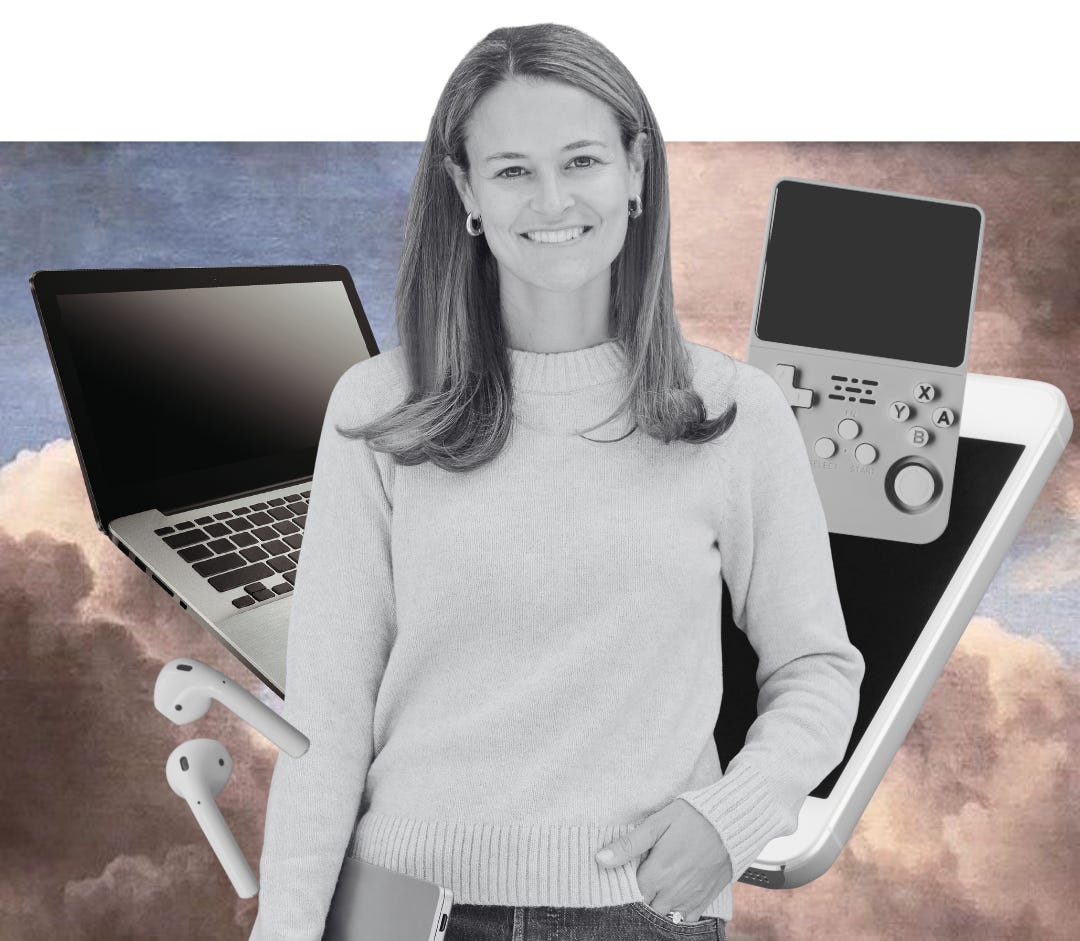
Two Truths talks parental screen use, intentionality & raising kids in a digital world with Techno Sapiens’ Jacqueline Nesi, PhD
Two Truths (TT): Whether we like it or not, the digital world is ever-present. Many of us work from home, answer emails on the go, pay for groceries with our phones, get directions from an app, and so on. It’s easy to have mixed feelings about that. How do we truly be present with ourselves, our children, and in our real-life amidst this digital presence?
Jacqueline Nesi, PhD (JN): One of the most common concerns I hear from parents is about being on their phones around their kids, and as a parent myself, I feel it, too. Our lives operate on our phones, they are essential for so much of how we exist in the modern world, and also, we often feel guilty or worried about using them in front of our kids.
So, first things first: Let’s just acknowledge that this is an impossible situation! I think it speaks to some of the unrealistic standards that we have for parents—and as parents, that we have for ourselves. So many of us have internalized the idea that any phone use around our kids is problematic, and that is just not true.
I think this, like so much of parenting and tech, is about finding a balance. If our phones are getting in the way—distracting us during moments when we want to be connected, interfering with family time, causing stress for our kids or us—then it’s probably time to reevaluate how we’re using them. If our kids see us occasionally checking an email, texting a friend, or whatever other task we’re doing on our devices, that is okay.
“So, first things first: Let’s just acknowledge that this is an impossible situation! I think it speaks to some of the unrealistic standards that we have for parents—and as parents, that we have for ourselves. ” —Jacqueline Nesi, PhD
TT: What do we know about the ways in which parental screen time impacts parenting? How does it impact children?
JN: There has now been some research on “technoference,” the idea that parents’ use of technology interferes with their interactions with their kids.
Studies find that parents’ technoference can have short-term effects on kids, including increased screen time and more behavioral problems. At this point, we do not have any solid evidence on long-term impacts. But if a parent is constantly on their phone and it interferes with their ability to connect with their child and attend to their needs, I can imagine this causing problems in the long term. In many cases, though, this is not what is happening. I think it’s about finding a balance.
Ultimately, the research points to the need for us to be mindful of our phone use around our kids, to be intentional about it, and, most importantly, to make time to nurture positive relationships with our kids. It does not point to a need to feel guilty every time we glance at our screens.
TT: And being mindful about phone usage can feel difficult because it is difficult.
JN: Our devices are designed to suck us in and be hard to put down. So, part of how we approach this mindfully is to spend time away from our phones, sometimes actively. I would approach this in two steps: First, think about what you want to change about your phone use and why. What do you want to make time for? What do you dislike about your current use?
Rather than going in saying, simply, “I want to use my phone less,” it can be more effective to say something specific, i.e., “I want to reduce the time I spend checking my email during the evenings [the what], because it’s taking away from time spent playing with my kids [the why].”
“Ultimately, the research points to the need for us to be mindful of our phone use around our kids, to be intentional about it, and, most importantly, to make time to nurture positive relationships with our kids. It does not point to a need to feel guilty every time we glance at our screens.” —Jacqueline Nesi, PhD
TT: That makes sense! We also have noticed IRL hobbies making a comeback: in-person fitness classes are full, people are craving community, and we saw some moms playing Mahjong during a kids’ tennis lesson last week.
JN: Yes! If you’re trying to reduce your phone use, it can be really helpful, as you mentioned, to have some IRL activities or hobbies to fill the space (e.g., physical reading, crossword puzzles, crafts, etc.).
Another tip for reducing phone use would be to set your environment up for success. Generally, it is more effective to use what’s called “situational self-control,” rather than relying on willpower alone. Some examples of how you might do this: Keep your phone out of reach and/or out of sight (in a drawer, in another room, etc.), disable Touch ID (i.e., use a password instead) to increase friction, and delete frequently used apps from your phone.
There are also products and apps that can help with this, such as Freedom (an app that helps you block distractions) and the Brick (a physical device that temporarily removes distracting apps and their notifications from your phone).
TT: Yet there’s always this bigger “state of the world” question looming: Denmark, for example, recently ended its federal postal service for letters. Sadly, in the digital world, we’re losing physicality—much of which is important to know and experience, especially as humans. (See: I want my kids to know how to use cash, but I don’t use cash. Should I start using cash instead of my phone to pay? Do I need to take out a physical map?) How do you counsel parents on towing this line?
JD: This is such a good question! I’d, again, first suggest taking a step back and thinking about what exactly feels sad about a scenario like this one. What do we feel like our kids are losing out on? A lot of times, we tie that feeling to the actual physical item (cash or a map), but really, it’s about something else.
For example, if I take a second to think about why it might bother me that my kids won’t use cash, it’s actually about human connection. They won’t go to the bank and interact with a bank teller, and they won’t hand over cash and chat with the person at the checkout. For maps, maybe it’s about losing a certain sense of adventure or a challenge they’d need to overcome.
Once we pinpoint the “loss” we’re concerned about, we can work to make space for those things.
Even if we’re using Apple Pay (which I do constantly!), we can model for them the important stuff: striking up conversations, saying thank you, and connecting with the people around us.
I don’t think we need to forego the conveniences of technology for some of these things; rather, we need to be intentional about replacing the values or skills we worry are being lost. ❍
What can you expect when you subscribe to Two Truths?
All subscribers… learned how Cassie is balancing big-picture health headlines with the hum of everyday life (including four recent reports on women’s health, plus winter must-haves for kids and grown-ups), and received our deep dive on gestational diabetes (including what you might need to do next). Plus, Kelsey shared details on the foot product for cracked heels she was almost embarrassed to talk about…and a grown-up tote for kids that’s perfect for carrying books and art supplies.
Paid subscribers… got a look behind some of the biggest headlines in women’s and maternal health, got access to the seven journaling techniques Kelsey uses for memory-keeping in motherhood, and got links to soups for sick days, keep-the-stomach-bug-away probiotics and more.
More recent reads…
📝 Seven journaling techniques I use for memory-collecting in motherhood
🕊 “I would have tried to drive away, too,” or solidarity in the wake of a tragedy
✨ Nostalgia in motherhood, plus: How to sleep better in every stage of parenthood
👶🏻 No more mom guilt, the push to breed super-babies & the gift of childfree friends
🧴 Easy kids’ snacks, $6 tees & the best sunscreen we’ve ever used
🤰🏽 The FDA met to discuss SSRIs in pregnancy; chaos & confusion ensued. Here’s what to know.
💔 ‘I can’t stop thinking about those girls’: A child psychologist unpacks collective grief
😴 “Sleep when the baby sleeps”: Maternal gaslighting or essential advice?
💭 Maternal desire: The missing element of mental health for mothers
😴 13 ways we’re making bedtime better
💯 How I read 100+ books in the last year as a work-from-home mom (part 2, free with no paywall!)
📚 18 brilliant books about motherhood & 25 questions to bring you closer to your mom
🤰🏽 70 affirmations to use in labor and birth
✨ Thanks for reading & thank you for supporting independent journalism that supports women and mothers. Hit the heart button to tell us you enjoyed this issue, share it on social media (don’t forget to tag @twotruthsmotherhood on IG), or forward it to a friend. We appreciate you. —Cassie and Kelsey
Want to sponsor an issue of Two Truths or learn about partnership opportunities?
I've been really out of the loop on newsletters and writings lately (because I've been trying to digital detox more) but I literally just posted a Substack this week about my own screen time use and what I'm doing about and also read 3 other articles this same week including a post from NPR about screen habits! Loved learning the term "technoference" and getting validation on some of the feelings and things I'm doing too from your newsletter! It must be a big topic right now and what a lot of parents are concerned about.
Here's a link to my article if it helps too! https://pearlsofjasmine.substack.com/p/032-new-year-new-screen-limits-for?utm_campaign=post-expanded-share&utm_medium=web